



Why Data Protection Access Rights Matter for Your Business
Data protection access is your legal right to know what personal information organizations collect, store, and use about you. Under regulations like GDPR, you can request confirmation of data processing, receive copies of your personal data, and get detailed information about how it’s being used.
Key aspects of data protection access include:
- Confirmation – Organizations must tell you if they’re processing your data
- Data copies – You can get copies of all personal information they hold
- Processing details – Learn why data is collected, who sees it, and how long it’s kept
- Timeline – Organizations have 30 days to respond to your request
- Cost – First copy is free; additional copies may have reasonable fees
- Verification – Organizations can verify your identity before releasing data
This right empowers individuals and helps businesses stay compliant with data protection laws. The stakes are high – GDPR fines can reach €20 million or 4% of global annual turnover, whichever is greater.
For small and medium businesses, understanding data protection access isn’t just about avoiding penalties. It’s about building trust with customers and creating transparent data practices. When you handle access requests properly, you demonstrate that you respect people’s privacy and take data protection seriously.
As Paul Nebb, founder of Titan Technologies and cybersecurity expert with over 15 years of experience, I’ve helped countless businesses steer data protection access requirements while maintaining operational efficiency. My work spans from small New Jersey companies to national corporations, ensuring they understand both the technical and legal aspects of data protection compliance.
Data protection access terms to remember:
- data protection security controls
- data protection governance risk management and compliance
- personal data protection
Why the Right of Access Matters
The right of access serves as the foundation for all other data protection rights. Without knowing what data an organization holds about you, how can you correct inaccuracies, request deletion, or exercise your right to data portability? This empowerment through transparency creates a fundamental shift in the data relationship between individuals and organizations.
Consider this: millions of people worldwide have had their personal information exposed in data breaches. The right of access allows individuals to understand their exposure and take proactive steps to protect themselves.
How This Guide Is Structured
We’ve organized this guide to take you step-by-step through the entire data protection access process. First, we’ll explore the fundamental right itself and what it covers globally. Then we’ll walk through making a Data Subject Access Request (DSAR), including practical tips and templates. Next, we’ll examine how organizations should respond, including timelines and technical requirements. Finally, we’ll cover limitations, consequences, and frequently asked questions.
Data Protection Access: Your Fundamental Right

Think of data protection access as your digital key to understanding what organizations know about you. It’s a powerful right that exists under regulations worldwide, giving you the ability to peek behind the curtain of data processing.
Under GDPR Article 15, you have the right to get confirmation about whether your personal data is being processed. If it is, you’re entitled to access that data along with detailed information about how it’s being used.
The European Commission guidance on access rights emphasizes that this is one of the most commonly exercised rights under GDPR. People want to know what’s happening with their information, and rightfully so.
Key Elements of the Right
When you submit a data protection access request, organizations must provide you with eight specific pieces of information that paint a complete picture of your data’s journey.
First, they must explain the purposes of processing – essentially, why they’re collecting and using your data. Next comes the categories of personal data they hold, which helps you understand exactly what types of information they have about you.
The recipients or recipient categories section reveals who else has access to your data. Organizations must also provide storage period information or the criteria they use to determine how long they keep your data.
Your rights information must be clearly explained, covering your ability to request corrections, deletions, restrictions, and objections. If they didn’t collect your data directly from you, they need to tell you about the data source.
For those concerned about automated decisions, organizations must provide details about any automated decision-making or profiling that affects you. Finally, if your data travels internationally, they must explain the safeguards protecting it during those transfers.
Data Protection Access and Other Rights
Data protection access isn’t a standalone right – it’s the foundation that makes all your other data protection rights possible. Think of it as the first domino in a chain of empowerment.
Once you know what data an organization holds about you, you can take action. If you find inaccuracies, you can request rectification to get them fixed. When you find data that’s no longer needed or was collected improperly, you can seek erasure to have it deleted.
The right to data portability becomes meaningful only after you understand what data exists and in what format. Similarly, your ability to object to processing based on legitimate interests or direct marketing relies on first knowing how your data is being used.
Our detailed guide on Personal Data Protection explores how these rights work together, creating a robust system of privacy protection that benefits both individuals and responsible businesses.
Making a Data Subject Access Request (DSAR)

Making a data protection access request doesn’t require jumping through legal hoops or using fancy terminology. Think of it as simply asking, “What do you know about me?” The process is designed to be accessible to everyone, whether you’re tech-savvy or just getting started with understanding your digital rights.
Who Can Submit & How
Anyone whose personal data is being processed can submit a DSAR. This covers a surprisingly wide range of situations.
Customers frequently request access to understand what information companies collected during purchases, account creation, or customer service interactions. Current and former employees can request access to workplace data, including emails, performance evaluations, disciplinary records, and HR files.
Website visitors often don’t realize they can request information about tracking cookies, browsing behavior, and analytics data that websites collect automatically. Authorized representatives can submit requests on behalf of others, but they’ll need written permission and proper documentation.
You can submit requests verbally or in writing through virtually any communication channel. There’s no requirement to use special forms or follow rigid procedures.
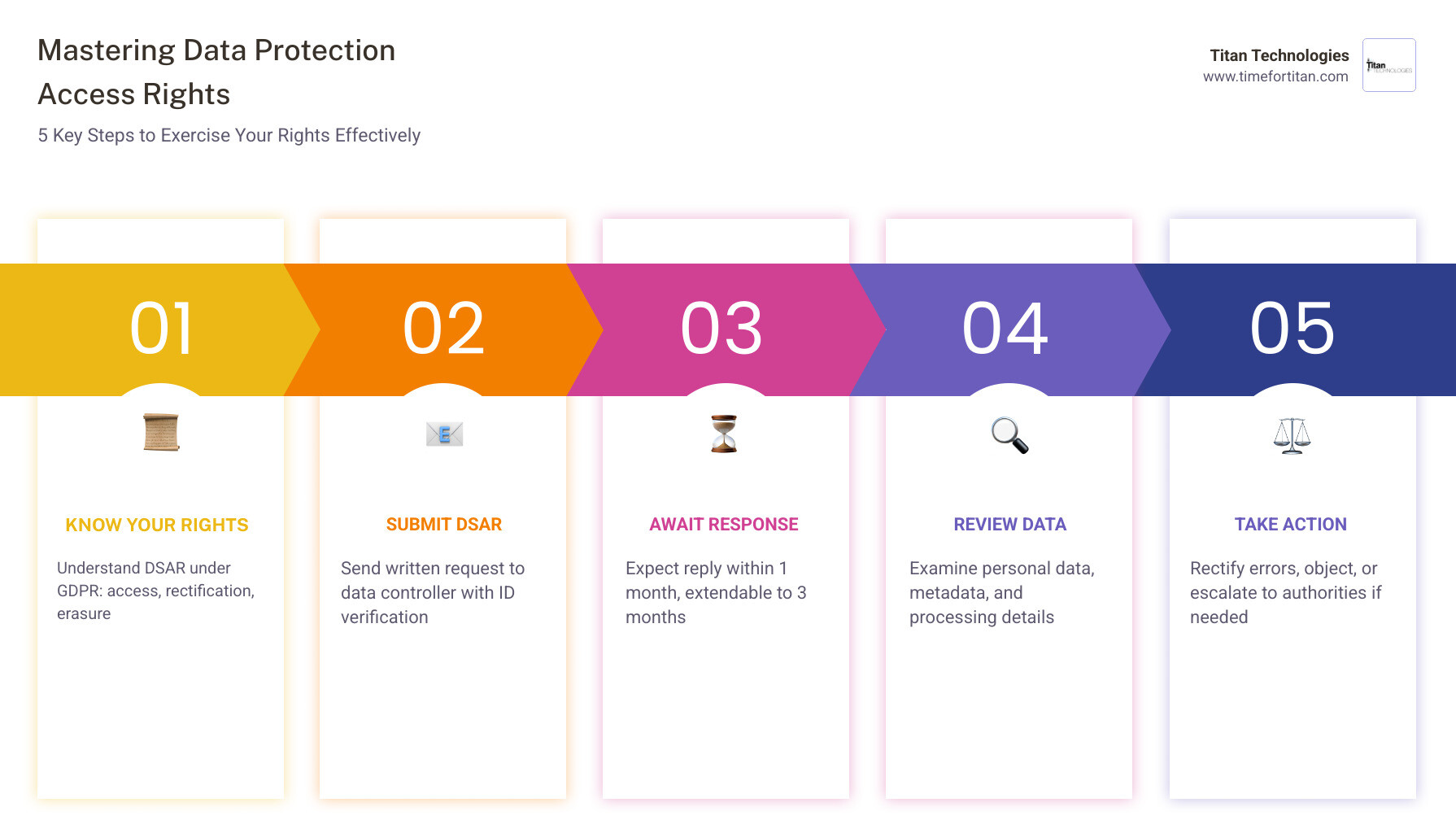
Submitting a Data Protection Access Request
The flexibility of data protection access requests means you can reach out through whatever channel feels most comfortable. Email remains the most popular option because it creates a clear paper trail and timestamp for your request.
Many organizations now offer dedicated privacy portals on their websites, which can streamline the process significantly. Phone calls work perfectly fine, though you’ll want to follow up with written confirmation. Written letters still carry weight, especially for formal situations.
Even social media messages constitute valid DSAR submissions, though organizations might ask you to move the conversation to a more secure channel for identity verification purposes.
The key is being specific about what information you’re seeking. Instead of saying “I want all my data,” try something like “I’d like copies of my account information, purchase history, and any notes from customer service interactions.”
Verification Without Friction
Organizations walk a careful line when verifying your identity. They need to protect your personal data from unauthorized access, but they can’t make the verification process so burdensome that it effectively denies your rights.
Multi-factor authentication through existing accounts often provides the smoothest experience. Email confirmation works well when you’re submitting requests from the same email address associated with your account.
Some organizations use privacy portals that combine secure login with streamlined request submission. Challenge questions about information only you would know provide another verification option that doesn’t require uploading documents.
The verification process should feel reasonable and proportionate to the sensitivity of the data being requested.
Responding to DSARs: Obligations, Timelines & Fees
When organizations receive a data protection access request, the clock starts ticking immediately. The response requirements vary significantly depending on where your business operates, but one thing remains constant: you need a solid plan to meet these deadlines.
| Jurisdiction | Standard Timeline | Extension Possible | Fee Structure |
|---|---|---|---|
| EU (GDPR) | 1 month | +2 months for complex cases | Free first copy, reasonable fee for additional |
| UK | 1 month | +2 months for complex cases | Free first copy, reasonable fee for additional |
| California (CCPA) | 45 days | +45 days with notice | Generally free |
| India (DPDP) | Reasonable time | Not specified | Not specified |
The one-month rule under GDPR is particularly strict. You have exactly 30 days from receiving a valid request to provide a complete response. Think you need more time? You must notify the person within that first month, explain why the extension is necessary, and you can only add up to two additional months for truly complex cases.
Administrative costs for reasonable fees must be genuinely based on your actual expenses. You can’t charge someone $500 for printing a few pages or sending an email.
Internal Workflow for Compliance
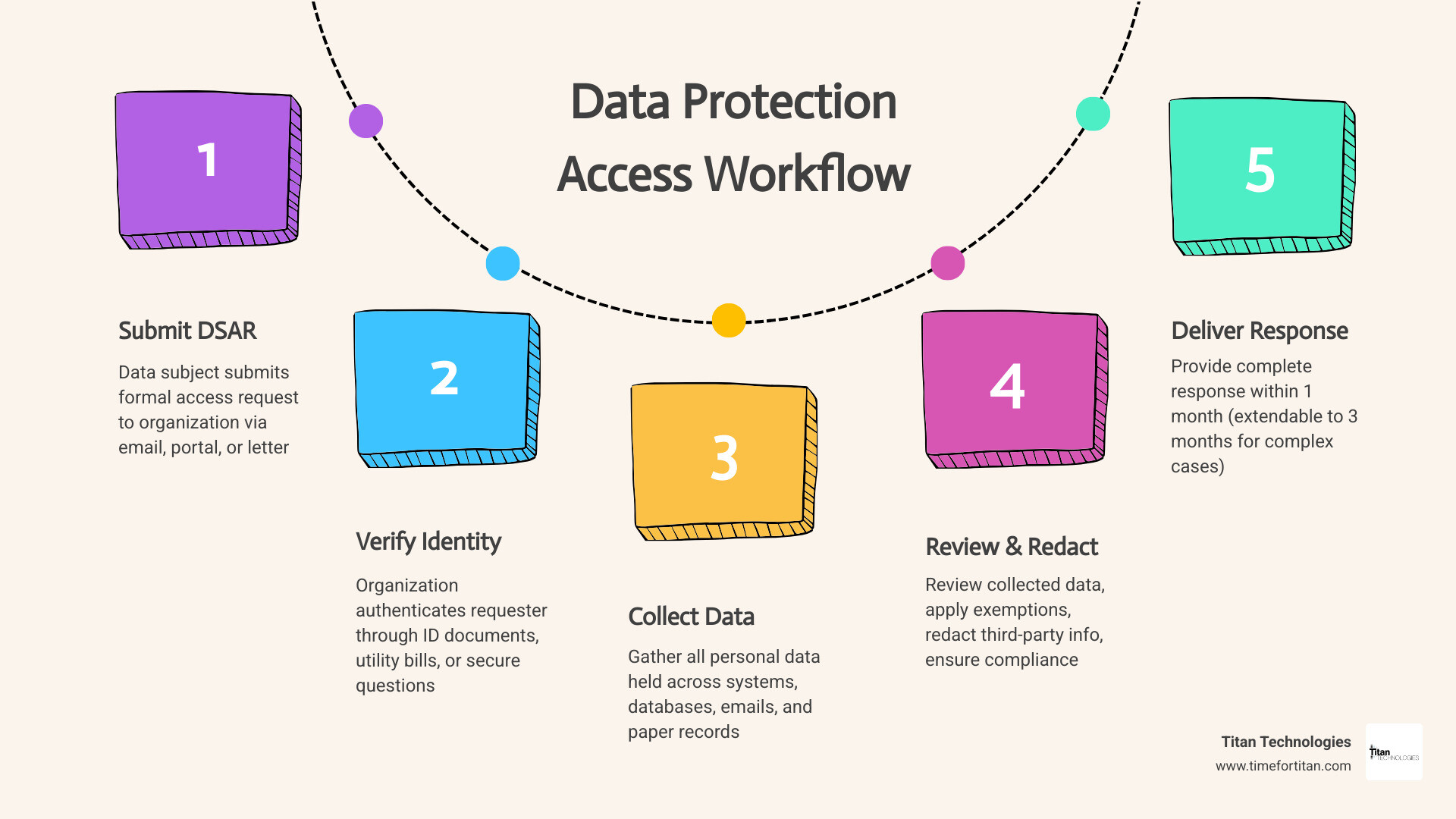
The most successful businesses treat data protection access requests like any other critical business process – with clear steps, assigned responsibilities, and built-in quality checks.
Logging every request from the moment it arrives prevents the dreaded “we never received that” situation. Data finding becomes the detective work phase. You’ll need to search across email systems, databases, backup files, and any third-party services that process data on your behalf.
Redaction requires careful judgment. You must remove information about other people while preserving the context of the requester’s data.
The organizational challenge often outweighs the technical one. Different departments may store data in completely separate systems, and getting them to coordinate within a 30-day deadline requires strong project management. Our Data Protection Governance, Risk Management, and Compliance guide helps businesses build these cross-departmental bridges before they’re needed.
Access Controls & Security Technology
Behind every smooth data protection access response lies robust security infrastructure. You need Role-Based Access Control (RBAC) so only authorized staff can access personal data during the search process. Multi-Factor Authentication ensures that when someone claims to be reviewing data for a legitimate request, they really are who they say they are.
Encryption protects data both when it’s stored and when you’re sending the response. Audit trails create a detailed record of who accessed what information and when – essential for both security and proving compliance if questions arise later.
Our Data Protection Security Controls guide provides step-by-step implementation strategies that work for businesses of all sizes.
Communicating the Data Protection Access Response
The final step in any data protection access response is actually getting the information to the person who requested it. Plain language makes all the difference. Instead of “data subject identifier: customer reference number,” just say “your customer number.”
Electronic delivery should match the request format – if someone emails you, email them back unless they specifically ask for something different. Explaining codes and abbreviations shows respect for the person’s time.
The goal is transparency without overwhelming people with technical details they didn’t ask for.
Limits, Exemptions & Consequences
While data protection access is a fundamental right, it doesn’t mean organizations must always say yes. Think of it like asking to see someone’s diary – there are legitimate reasons why some information needs to stay private. The key is that organizations can’t just refuse because they don’t feel like responding. They need valid, documented reasons.
When You May Say “No”
Organizations can refuse data protection access requests in specific situations, but they must prove their case. The most common valid refusals involve manifestly unfounded requests – those clearly made in bad faith or without merit. For example, someone who repeatedly submits identical requests every few days is likely acting unreasonably.
Manifestly excessive requests also justify refusal. This doesn’t mean asking for lots of data, but rather making repetitive requests or demanding information in ways that would consume unreasonable resources.
Third-party rights create another legitimate boundary. If releasing your data would reveal someone else’s personal information, organizations must balance competing privacy interests. They might redact names or details rather than refusing entirely, but sometimes complete refusal is the only option.
Trade secrets and confidential business information also justify restrictions. Organizations don’t have to reveal proprietary algorithms or business strategies just because they use personal data. However, they still must explain what data they process and why.
National security exemptions apply when government agencies or law enforcement have legitimate operational needs. Similarly, legal privilege protects attorney-client communications and similar confidential relationships.
Penalties for Non-Compliance
The stakes for ignoring data protection access obligations are genuinely serious. GDPR fines can reach €20 million or 4% of global annual turnover – whichever amount would hurt more. That’s not just a theoretical threat either.
Regulatory investigations consume enormous time and resources. When data protection authorities come knocking, businesses often spend months gathering documents, attending meetings, and explaining their practices.
Reputational damage from public enforcement actions can hurt more than financial penalties. Customers lose trust when they see headlines about data protection failures.
Real enforcement cases show these consequences aren’t empty threats. The Dutch Data Protection Authority imposed an €830,000 fine on an organization simply for charging improper fees for DSAR responses.
Common Challenges & Best Practices
Most organizations struggle with data protection access requests not because they want to be difficult, but because their systems and processes weren’t designed for this purpose.
Data scattered across multiple systems creates the biggest headache. Customer information might live in sales databases, support tickets, email systems, and backup servers. Legacy systems compound the problem. Older databases often lack modern search capabilities, making it difficult to locate specific individuals’ data quickly.
Organizational coordination presents equally significant challenges. Lack of trained staff means requests get mishandled or delayed. Unclear internal processes result in confusion about who should do what.
Here are practical approaches that work: Appointing a single point of contact ensures nothing falls through the cracks. Creating standardized templates speeds up both internal workflows and external responses. Training all customer-facing staff helps identify and properly escalate requests. Implementing automated logging prevents missed deadlines. Conducting regular data mapping means knowing where personal data lives before requests arrive. Testing your processes through regular drills reveals weaknesses when you can still fix them.
Frequently Asked Questions about Data Protection Access
What information must an organisation provide in a DSAR response?
When you submit a data protection access request, you’re entitled to a lot more than just a copy of your data. Think of it as getting the complete story about how an organization handles your personal information.
The response must start with confirmation – a simple yes or no about whether they actually process your personal data. If the answer is yes, they need to provide copies of all personal data they hold about you. This isn’t just your name and email address – it’s everything from purchase history to website cookies to notes in customer service systems.
Organizations must explain the processing purposes – basically, why they collect and use your information in the first place. They also need to tell you about data categories (what types of information they maintain) and recipients (who else gets to see your data).
They must explain retention periods – how long they plan to keep your information and why. If they got your data from somewhere other than directly from you, they need to reveal those data sources.
They must inform you about your rights to correct, delete, or restrict how they use your information. If they use automated decision-making or profiling, they need to explain how that works. And if they send your data to other countries, they must describe the international transfer safeguards in place.
The best part? This comprehensive response must be clear, understandable, and provided free of charge for the first copy.
How does an organisation verify identity without breaching privacy?
Organizations need to make sure they’re giving your data to you, not to someone pretending to be you. But they can’t make the verification process so complicated that it discourages legitimate requests.
Smart organizations use proportional verification methods that match the situation. If you’re requesting data through the same email address they have on file, a simple email confirmation often works perfectly. For existing account holders, using your regular login credentials makes sense.
Some organizations get creative with challenge questions about information only you would know – like asking about your last purchase or account activity. Multi-factor authentication through established channels (like sending a code to your phone number on file) works well too.
Here’s what crosses the line into excessive territory: demanding notarized documents for simple requests, requiring in-person appearances for online account data, or creating verification processes that are more burdensome than simply accessing your account normally.
The golden rule is proportionality. Requesting basic customer service data shouldn’t require the same verification as accessing highly sensitive financial records.
Are there fees for data protection access requests?
Here’s some good news: data protection access requests are almost always completely free. The first copy of all your personal data, along with all the required processing information, won’t cost you a penny.
Organizations can only charge reasonable fees in very specific situations. If you want additional copies beyond the first one, they might charge for the administrative costs. The same goes for requests that are clearly excessive – like asking for the same information every week.
But here’s the catch – organizations must prove that fee exceptions apply. They can’t charge you simply because responding takes time or effort. That’s just part of doing business in the modern data protection world.
When fees are justified, they should only cover actual administrative costs, not profit margins. Organizations must be completely transparent about how they calculated any fee, and the amount must be reasonable.
Conclusion
Data protection access rights have fundamentally changed how we think about personal information. What once belonged entirely to organizations now belongs to the individuals it describes. This shift isn’t just legal jargon – it’s about giving people real control over their digital lives.
If you’re an individual learning about these rights, exercising them doesn’t require legal expertise or special forms. A simple email asking “what data do you have about me?” can start the entire process. Organizations must respond within 30 days, provide comprehensive information, and do so free of charge for your first request.
For businesses, data protection access compliance might seem daunting at first. The technical challenges of finding data across multiple systems, the legal requirements for complete responses, and the tight deadlines can feel overwhelming. But once you build proper processes, DSAR management becomes routine rather than crisis management.
At Titan Technologies, we’ve watched businesses transform their approach to data protection access. Companies that initially panicked over their first DSAR now handle requests smoothly and confidently. The secret isn’t just technology – it’s understanding that good data protection practices benefit everyone.
When you can quickly locate customer data, you can also resolve customer service issues faster. When you have clear retention policies for data protection access compliance, you also reduce storage costs and security risks. When you train staff to recognize DSARs, you also improve overall privacy awareness across your organization.
We’ve helped businesses throughout Central New Jersey turn compliance challenges into competitive advantages. From small Edison startups to established Newark corporations, the pattern remains consistent: proactive data protection access preparation pays dividends beyond regulatory compliance.
The enforcement landscape continues evolving, with regulators becoming more sophisticated and individuals more aware of their rights. Organizations that wait until they receive their first DSAR often struggle with rushed implementations and stressed teams. Those that prepare in advance handle requests professionally and build customer trust in the process.
Our cybersecurity team provides fast, reliable support with a 100% satisfaction guarantee because we understand that data protection access isn’t just about avoiding fines – it’s about building sustainable business practices that respect customer privacy while maintaining operational efficiency.
Ready to strengthen your data protection processes? We’re here to help you steer these requirements with confidence and competence.
For more info about our services & solutions, contact Titan Technologies today. Let’s work together to make data protection a strength rather than a stress point for your business.