



Why Understanding Managed IT Service Provider Pricing is Critical for Your Business
Managed it service provider pricing can be confusing. One provider quotes $99 per user, another $250, while a third charges per device. Meanwhile, your current IT support leaves you waiting when systems crash, making you question if managed services are worth the investment.
Here’s what drives managed IT service provider pricing:
- Pricing Models: Per-user ($100-$400/month), per-device ($30-$100/month), tiered, or flat-rate
- Business Size: Small businesses (10-50 users) often pay $500-$3,000/month
- Service Scope: Basic monitoring vs. comprehensive cybersecurity and support
- Infrastructure Complexity: Number of devices, servers, locations, and compliance needs
- Support Level: Business hours vs. 24/7 with guaranteed response times
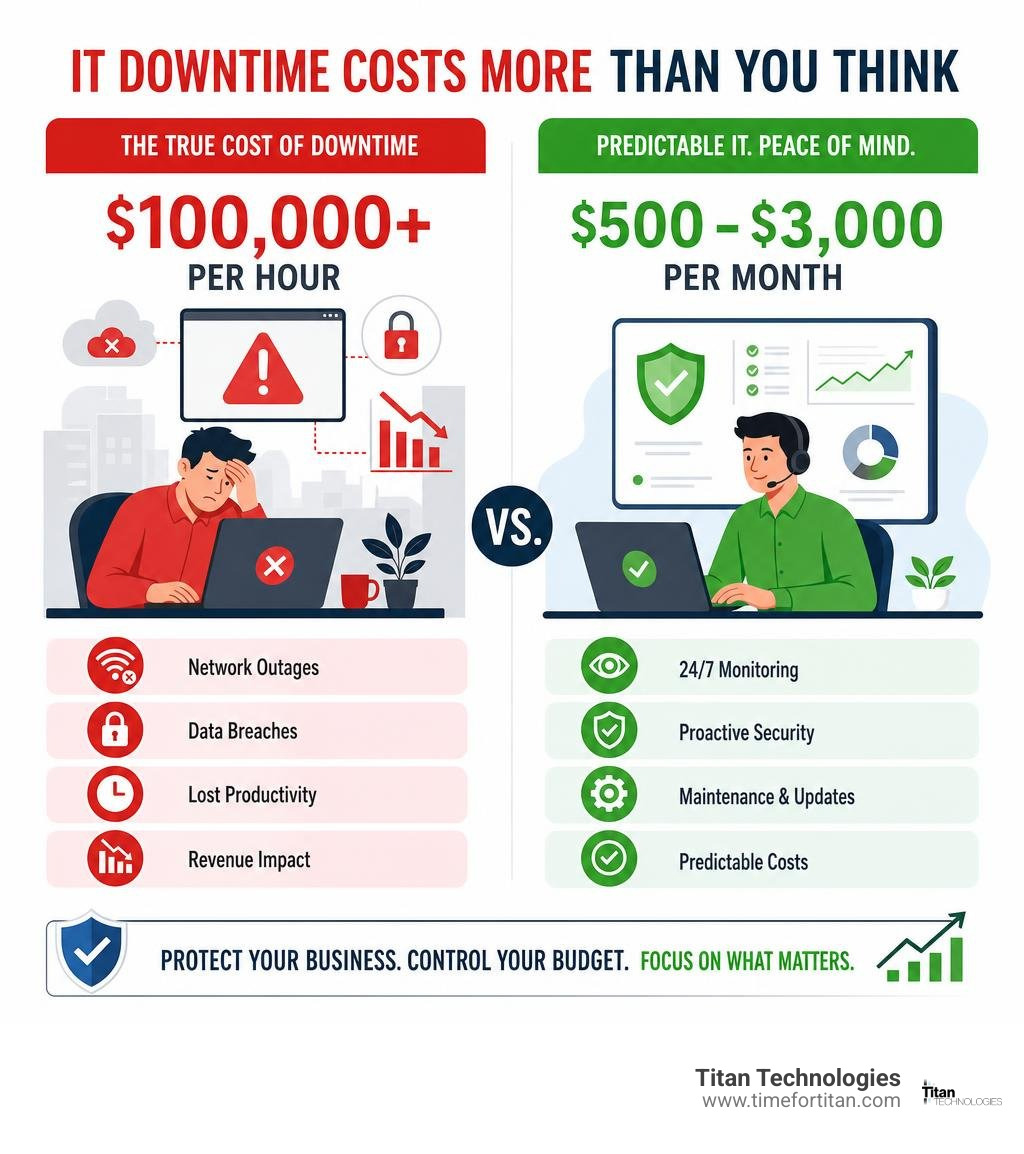
The stakes are high. Small businesses lose an average of $100,000 per hour during network downtime, and 43% of cyberattacks target them. Many business owners in Central New Jersey are stuck with slow, reactive IT support that costs more in the long run.
Understanding how pricing works allows you to make smart decisions that protect your business without breaking your budget. This guide breaks down everything you need to know about managed IT service costs, from hidden fees to the real value of proactive support.
I’m Paul Nebb, founder of Titan Technologies. For over 15 years, I’ve helped businesses steer managed it service provider pricing. I’ve seen how the right IT partnership transforms operations, while the wrong one drains budgets with surprise charges and poor service.
Decoding Managed IT Services Pricing Models
Managed it service provider pricing uses terms like “per-user,” “tiered,” and “all-inclusive.” Understanding these models is key to finding the best value for your business without hidden costs.
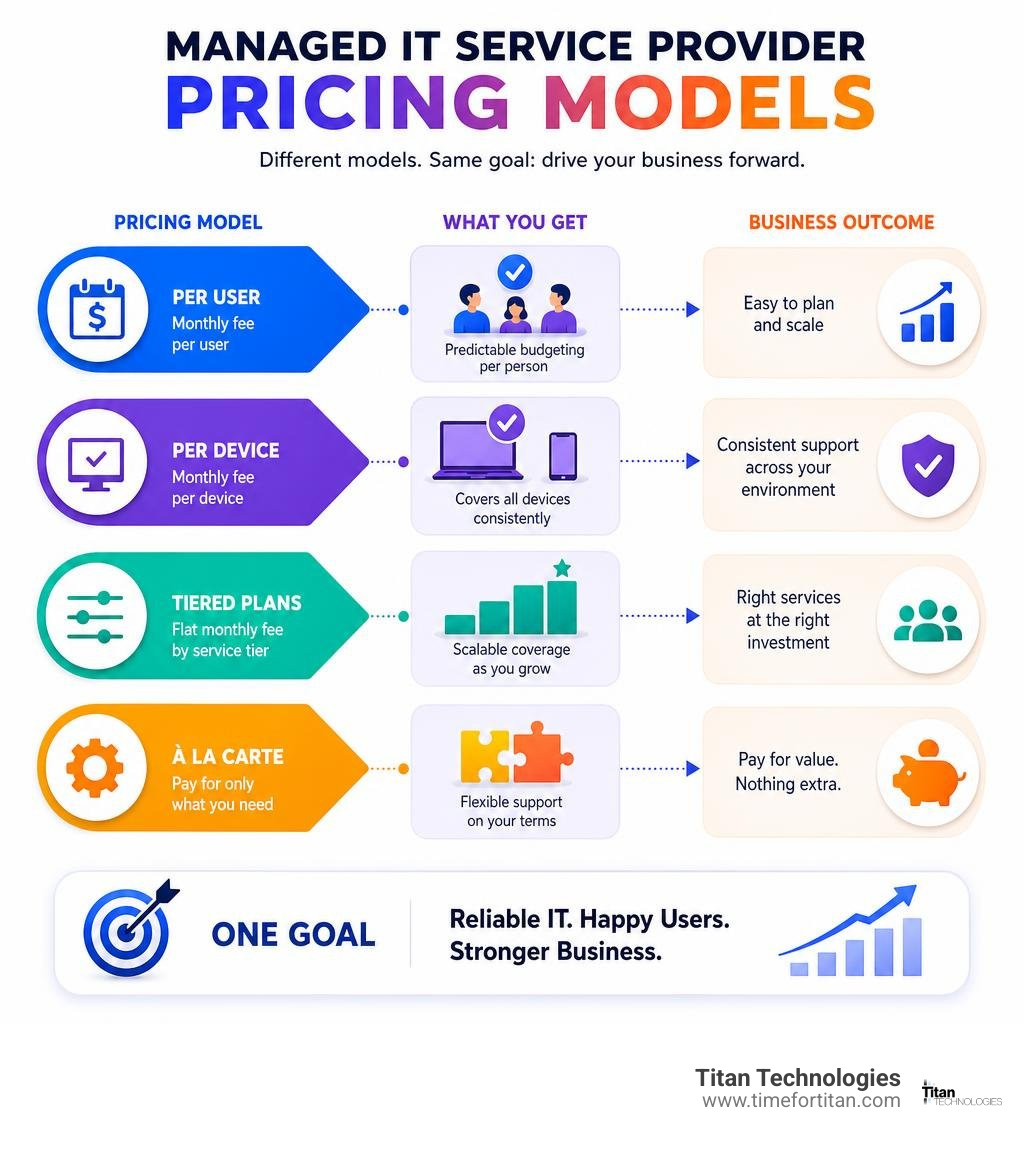
Think of these models like cell phone plans: some charge per line, others bundle everything. The goal is to find a plan that matches your technology usage.
Per-User and Per-Device Pricing
These two models are straightforward and predictable. The per-user model provides a support plan for each employee, covering all their devices under one monthly fee. This is ideal for today’s hybrid work environments, offering excellent scalability for remote and hybrid users. Whether an employee works from the office or home, all their devices are protected and supported. This makes services like Mobile device management services particularly valuable for keeping smartphones and tablets secure.
The per-device model charges for each piece of equipment separately—servers, desktops, and network printers each have their own line item. This works well for businesses with shared equipment, like manufacturing floors or offices with shared workstations.
Both models offer predictable monthly costs, eliminating surprises on your IT bill.
Tiered and All-Inclusive (Flat-Rate) Models
Tiered packages offer “Good, Better, Best” options. You start with basic services and add more features as your needs and budget grow.
Bundled services in tiered models typically start with essentials like monitoring and antivirus, with higher tiers adding strategic consulting and advanced security. The service inclusions are clearly defined at each level, giving you flexibility. A growing firm might start with a basic plan and upgrade later for compliance management and 24/7 support.
All-inclusive or flat-rate models are like an “all-you-can-eat” buffet for IT support. One monthly fee covers everything, from remote support to on-site fixes. The budgeting benefits are significant, as you’ll never face surprise charges for extra support hours. This model is perfect for businesses that want to set their IT budget and forget it.
Customized and Monitoring-Only Models
For unique needs, customized models offer pay-per-service flexibility. If you only need help with specific tasks like backup management and cybersecurity, you can build a plan without paying for services you won’t use.
Monitoring-only models are the most basic option. The MSP watches your systems and alerts you to problems, but fixing them often incurs additional costs. While the low monthly fee is attractive, these plans have the potential for additional costs. When a server fails at 2 AM, emergency reactive support fees can turn a budget plan into an expensive surprise. Ask yourself: do you have the in-house expertise to handle alerts? If not, a more comprehensive plan is likely more cost-effective.
Key Factors That Influence Your Final Bill
Beyond the pricing model, several key factors influence your final managed it service provider pricing. Understanding these components helps you see why costs can vary significantly between businesses.

Business Size and IT Infrastructure Complexity
Your business size and IT complexity are the biggest cost drivers. More users and devices mean more support and monitoring. The number of users and number of devices form the basis of most price calculations. However, a 20-person firm with basic computers will pay less than a 20-person firm using high-end workstations with specialized software.
Network complexity also adds to the cost. Multiple office locations, on-premise servers, and cloud applications all increase the management workload for your MSP. At Titan Technologies, we’ve seen how these factors create substantial differences in managed it service provider pricing for businesses across Central New Jersey. You can learn more info about desktop and network support and how we manage diverse infrastructures.
The Critical Role of Cybersecurity Services
With 43% of cyberattacks targeting small businesses, cybersecurity is a necessity, not an option. Your investment in security directly impacts your budget.
Basic cybersecurity, like antivirus and firewall management, is often standard. However, comprehensive protection requires more. Advanced security services like Endpoint Detection and Response (EDR) actively monitor devices for threats, while a Security Operations Center (SOC) provides 24/7 expert monitoring to stop attacks before they cause damage.
Compliance requirements for handling sensitive data (e.g., credit cards, medical records) demand specialized security measures and can increase costs. Services like penetration testing may be required but often come at an additional price. Considering the average data breach costs nearly $4 million, this investment is a bargain. Our page on network security services explains how comprehensive protection works.
Service Level Agreements (SLAs) and Support Needs
Your SLA defines the level of service you receive. Key factors include response times (how quickly they acknowledge an issue) and resolution times (how quickly they fix it). A 15-minute guaranteed response for critical issues costs more than a next-day guarantee.
Support availability is another major cost driver. Do you need 24/7 support or are business hours enough? Do you require frequent on-site support, or can issues be handled remotely? Each upgrade in service level increases your investment but also provides greater peace of mind. The right balance depends on your business needs. More info about proactive system maintenance shows how preventing issues can reduce the need for emergency support.
Data Backup and Disaster Recovery
Protecting your data is crucial, and the cost depends on several factors. Data volume is a starting point, but backup frequency is just as important. Hourly backups cost more than daily ones but minimize potential data loss.
Your recovery objectives also drive costs. Your Recovery Time Objective (RTO) is how quickly you need to be operational after a disaster, while your Recovery Point Objective (RPO) is how much data you can afford to lose. Stricter RTOs and RPOs require more robust and expensive solutions.
Business continuity planning goes beyond backups to ensure your business can survive a major incident. Cheap backup solutions often fail when needed most. Quality data protection is an investment in your business’s survival. More info about business disaster recovery services offers insight into comprehensive strategies.
The True Value: Managed Services vs. Other IT Support Models
When looking at managed it service provider pricing, it’s crucial to focus on value and return on investment (ROI), not just the monthly fee. A higher upfront cost for managed services often leads to significant long-term savings and efficiency.

It’s like maintaining your car: small, regular payments for maintenance are better than a huge, unexpected bill for a breakdown. The same principle applies to your IT.
The Reactive Trap of the Break-Fix Model
The break-fix model means you only call for IT help when something breaks. While it seems cheap, it’s a reactive trap. The IT provider profits from your problems, creating an incentive misalignment with no motivation to prevent issues.
This leads to unpredictable expenses that make budgeting a nightmare. The real cost isn’t just the hourly rate; it’s the lost productivity during downtime. With small businesses lose an average of $100,000 per hour during network downtime, an outage in your Woodbridge, NJ office is a direct hit to your bottom line.
In-House IT vs. Outsourcing for Small Businesses
Hiring an in-house IT team seems appealing, but the costs are high. Beyond IT staff salaries, you have benefits, recruitment costs, ongoing training expenses, and technology overhead. A single IT professional can cost more annually than a comprehensive managed services plan.
The bigger challenge is that one person rarely has all the necessary expertise. These skill gaps in areas like cybersecurity or cloud management can leave your business vulnerable. Partnering with an MSP like Titan Technologies gives you access to specialized expertise from an entire team. You get enterprise-level knowledge without the cost of hiring multiple specialists—an entire IT department for a fraction of the cost of one employee.
Calculating the ROI of a Managed IT Partnership
The ROI of managed IT goes beyond cost-cutting. It’s about making technology a strategic asset.
- Reduced downtime: Proactive monitoring catches issues before they become disasters, ensuring more uptime for your team.
- Improved security: With 24/7 monitoring and expert-led strategies, an MSP dramatically reduces your risk of cyberattacks, which target 43% of small businesses.
- Increased employee productivity: When technology works smoothly, your team can focus on growing the business instead of troubleshooting IT problems.
- Strategic IT planning: Virtual CIO services align technology investments with your business goals, turning IT from a cost center into a competitive advantage. Learn more info about consulting services and how this partnership can help.
- Predictable budgeting: A flat monthly fee eliminates surprise IT bills, allowing for accurate financial planning.
A successful MSP partnership can lower overall IT costs while improving service quality.
How to Evaluate Managed IT Service Provider Pricing
Choosing the right MSP is a critical business decision that impacts your operations, security, and finances. The challenge is that managed it service provider pricing can be complex. The key isn’t just comparing monthly fees—it’s understanding the true value you receive.
Understanding Value-Centric vs. Price-Centric Providers
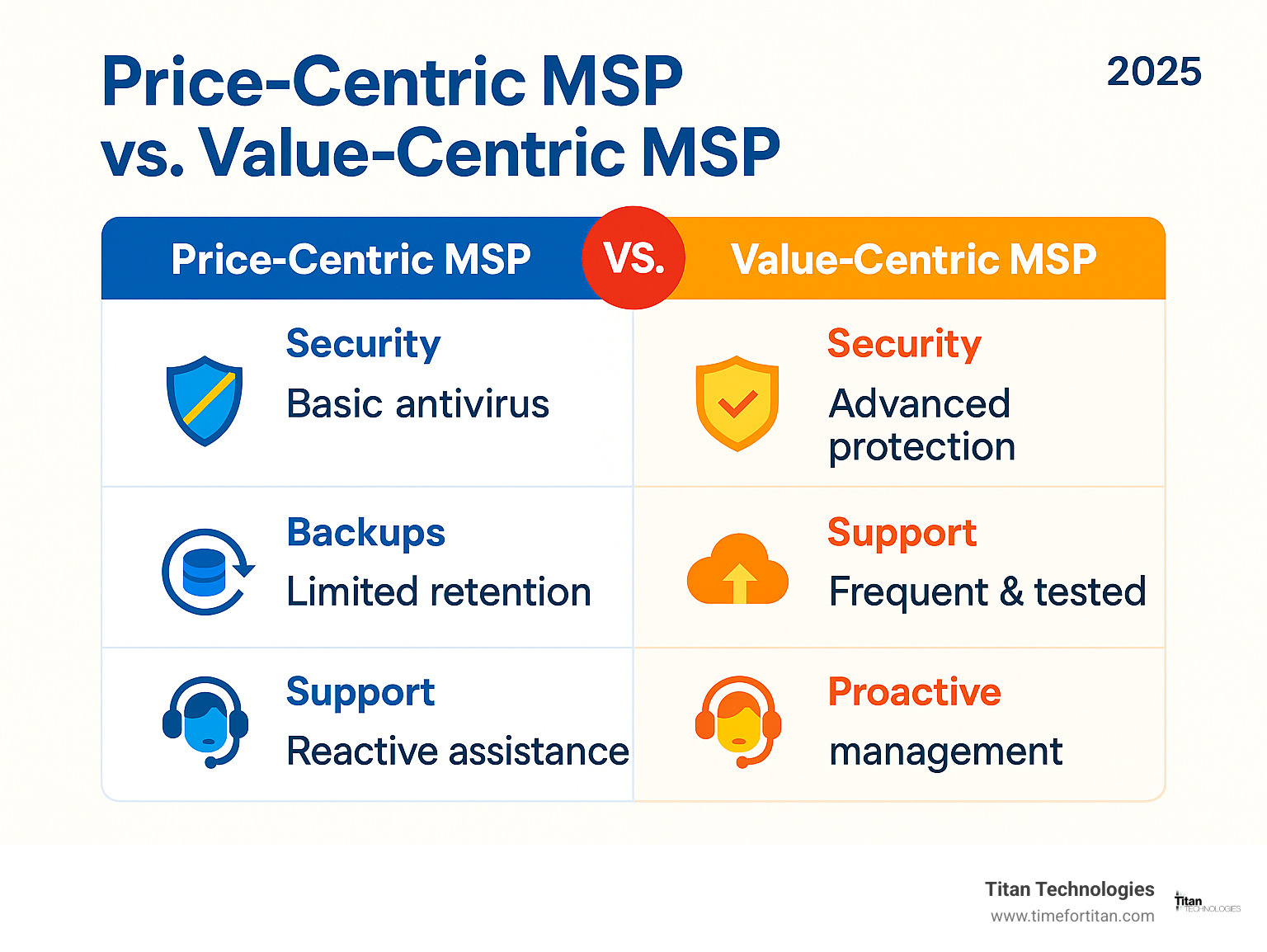
The cheapest option is rarely the most economical. Price-centric providers attract you with a low monthly rate, but their model often includes numerous extra charges. Need on-site support or help with a server issue? That’s an additional fee. They often exclude critical services like advanced cybersecurity or backup testing from their base packages, leading to a much higher total cost of ownership.
Value-centric providers focus on delivering comprehensive solutions aligned with your business goals. Their upfront managed it service provider pricing may seem higher, but they bundle essential services like proactive monitoring, cybersecurity, and strategic planning. Their incentive is to keep your systems running smoothly, creating a true partnership where both parties benefit. At Titan Technologies, we’ve seen businesses switch from price-centric providers and immediately see an improvement in service and overall costs.
Uncovering Hidden Costs and Exclusions in Your Contract
Unexpected IT bills are frustrating. Contract transparency is crucial to avoid hidden fees.
- Onboarding fees: Some providers charge substantial setup costs. Be wary of high upfront fees just to get started.
- Project work charges: Your monthly fee may cover daily support, but larger initiatives like office moves or system upgrades could be billed separately. Clarify what constitutes “project work.”
- After-hours support costs: If your business operates outside standard 9-to-5 hours, check if 24/7 support is included or costs extra. This is critical for many businesses in Central New Jersey.
- Third-party software support: Clarify if your provider supports all your business applications or just common ones. Support for specialized industry software may cost more.
- Hardware procurement policies: Some MSPs require you to buy hardware through them at a markup. Understand their policy upfront.
A reputable provider will provide a detailed breakdown of what’s included and what’s not.
Key Questions to Ask Any Potential MSP
Asking the right questions helps you find a true IT partner. Here are the essentials:
- What is included and excluded in the flat monthly fee? Get a comprehensive list to understand potential extra charges.
- How do you handle security incidents? Know their response plan, especially since 43% of cyberattacks target small businesses.
- What are your guaranteed response times in the SLA? Ensure response times are clearly defined for different issue severities.
- Is project work, like an office move, included? This helps you budget for future changes and growth.
- Can you provide client references or case studies? Speaking with current clients offers real insight into their service quality.
Taking the time to ask these questions now can save you significant headaches and costs later.
Frequently Asked Questions about Managed IT Service Provider Pricing
We understand managed it service provider pricing can be complex. Here are answers to the three most common questions we hear from business owners in Central New Jersey.
What is a typical monthly cost for a small business?
This is the most common question, but the answer depends on your specific needs. For a small business with 10-50 employees, the monthly investment can vary significantly. A law firm in Princeton has different requirements than a manufacturing company in Edison.
Generally, per-user pricing averages a reasonable monthly rate, while per-device pricing is lower per unit. The total value is what matters most. A business with 15-20 users might find a comprehensive solution falls within a predictable monthly range. The key is to get a quote customized to your environment rather than relying on averages. The cheapest option is rarely the most economical in the long run.
Are advanced cybersecurity services always included in the base price?
Not always. Basic security measures like antivirus, firewall management, and patch updates are typically included in most managed IT packages. These are foundational protections.
However, advanced cybersecurity services often cost extra or are part of higher-tier packages. This includes sophisticated tools like Endpoint Detection and Response (EDR), 24/7 Security Operations Center (SOC) monitoring, and comprehensive compliance management.
Since 43% of cyberattacks target small businesses, these services are essential, not luxuries. Ask any potential MSP to clearly outline which security measures are in their base price and which are additional investments. Don’t assume anything is included.
How do contracts and Service Level Agreements (SLAs) affect my final price?
Contracts and SLAs directly impact your price and service level. Contract length can influence pricing, with some providers offering discounts for longer commitments. We find that flexible month-to-month terms after an initial period often work best for growing businesses.
Service Level Agreements have the biggest impact on price. They define service guarantees like response times and resolution times. A 15-minute response guarantee for critical issues will cost more than next-business-day support. Similarly, guaranteed on-site support within hours costs more than remote-only assistance.
After-hours and weekend coverage is another key factor. Some providers include 24/7 support in their base price, while others charge premium rates. Also, review termination policies to ensure you aren’t locked into a partnership that isn’t working. Your SLA should match your business needs to provide the right value.
Conclusion: Making a Strategic IT Investment
When considering managed it service provider pricing, smart business owners look beyond the monthly fee. Your IT infrastructure is the digital backbone of your business—it’s a strategic asset, not just an expense. Every minute of downtime and every security breach directly impacts your bottom line and reputation.
The real value of managed IT services is changing IT from a reactive headache into a proactive advantage. You gain peace of mind knowing experts are monitoring your systems 24/7, preventing problems, and keeping your business running smoothly.
Beyond cost-cutting, you’re investing in growth. When technology works, your team is more productive. When your data is secure, your business is protected. With strategic IT guidance, you can make technology investments that drive your business forward.
At Titan Technologies, we have been a reliable partner for businesses throughout Central New Jersey for years. Whether you’re in Edison dealing with network issues or in Princeton concerned about cybersecurity, our professional team provides fast, reliable support with a 100% satisfaction guarantee.
We believe technology should work for you, not against you. Our approach focuses on efficient network management, advanced security, and understanding your unique business needs. We’re not just an IT provider; we’re your technology partner, invested in your success.
Your journey toward strategic IT investment starts with a conversation. Explore our managed IT services and solutions and find how the right partnership can turn your technology into a competitive advantage.