




Why Multi-Cloud Disaster Recovery is Critical for Business Survival
Multi cloud disaster recovery is a strategic approach that protects your business data and operations by spreading them across multiple cloud providers – so if one fails, another keeps you running.
Key Components:
- Redundancy – Data exists in multiple clouds simultaneously
- Automated Failover – Systems switch providers without human intervention
- Geographic Distribution – Resources spread across different regions and vendors
- Recovery Objectives – Clear targets for recovery time (RTO) and data loss (RPO)
Over 80% of businesses already use more than one cloud provider, and by 2025, 50% of the world’s data will live in cloud systems. Yet most companies still rely on single-cloud disaster recovery – leaving them vulnerable when that one provider goes down.
For Central New Jersey businesses, the stakes are especially high. When customers expect 24/7 availability, even brief outages can cost thousands in lost revenue and damaged reputation.
I’m Paul Nebb, founder of Titan Technologies with over 15 years helping businesses steer complex IT challenges including multi cloud disaster recovery implementations.
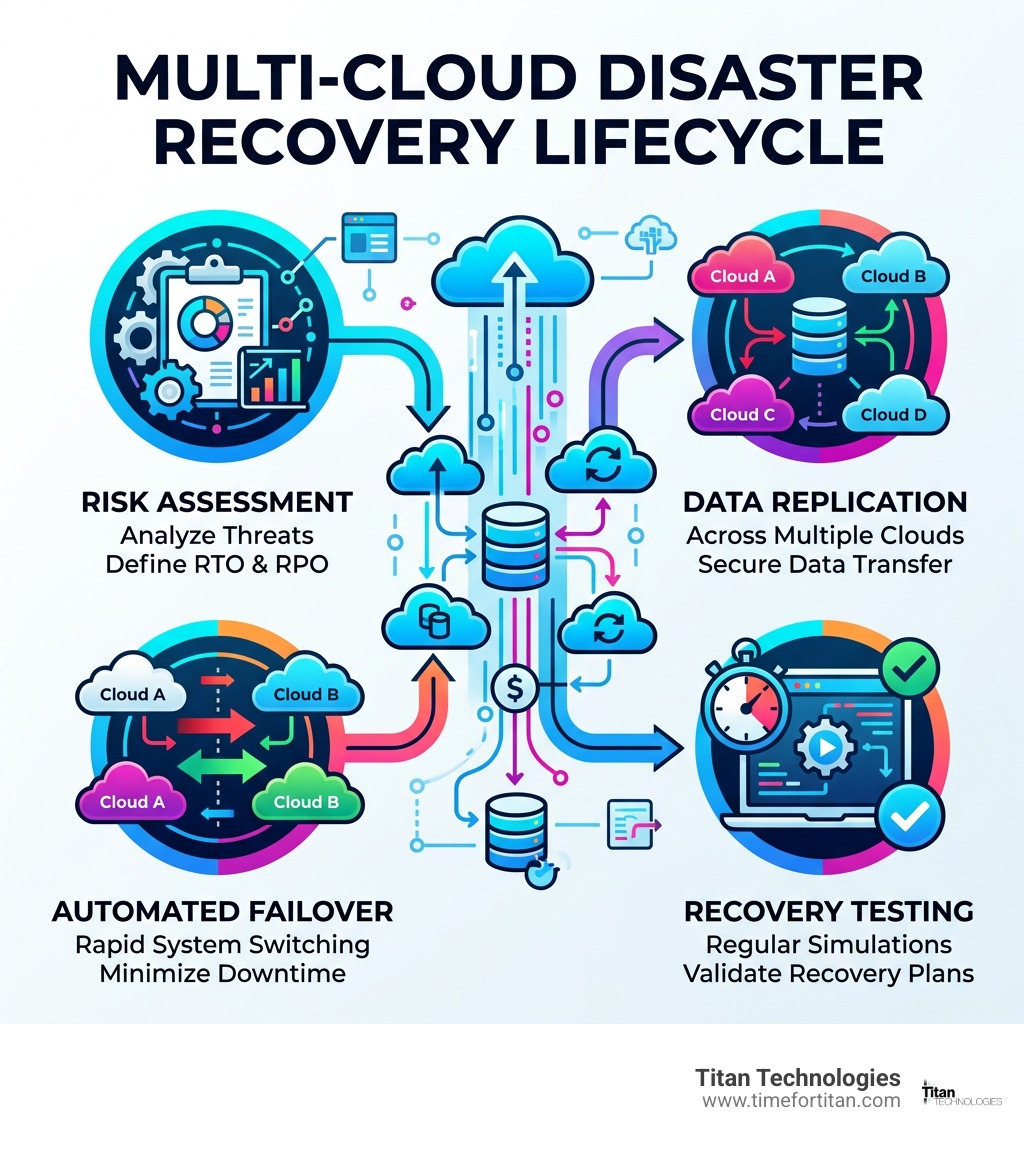
Multi-cloud disaster recovery helps businesses keep critical systems running by spreading recovery resources across more than one cloud provider. Instead of relying on a single platform, this approach creates multiple failover paths, improves regional resilience, and reduces the risk of provider-specific outages. It can also support stronger business continuity when paired with services like Business Disaster Recovery (BDR) and broader Cloud Services.
Why This Guide Matters
The average cost of downtime is staggering – some corporations lose over $500,000 per minute during outages. For Central New Jersey businesses in Edison, Elizabeth, Lakewood, Newark, Trenton, Princeton, New Brunswick, Matawan, Woodbridge, Freehold, and Red Bank, even smaller outages can devastate operations.
93% of companies that lose their data center for 10 days or more file for bankruptcy within one year. This isn’t just about having backups – it’s about ensuring your entire business can continue operating when the unexpected happens.
What Is Multi-Cloud Disaster Recovery?
Multi cloud disaster recovery spreads your backup and recovery systems across different cloud providers – like AWS, Microsoft Azure, and Google Cloud – so when one provider has problems, your business automatically switches to another.
This approach differs from traditional disaster recovery methods. In the past, you might have backed up data to tapes stored in a vault. That was slow and risky. Even single-cloud disaster recovery, while faster, still puts all your trust in one provider.
Multi cloud disaster recovery changes the game by spreading risk across multiple independent companies. When one has issues, your systems seamlessly move to another provider that’s still running smoothly.
The beauty of vendor diversity is that it’s extremely unlikely all your cloud providers will have problems simultaneously. They use different data centers, networks, and technologies, creating multiple failover paths.
Latest market insight on multi-cloud adoption confirms what we’re seeing: businesses recognize that putting all their eggs in one cloud basket doesn’t make sense anymore.
Key Concepts & Terminology
Recovery Time Objective (RTO) answers: “How long can our business be down before we’re in serious trouble?” For a busy medical practice, the RTO might be 30 minutes. For a small accounting firm, it might be 4 hours during tax season.
Recovery Point Objective (RPO) asks: “How much data can we afford to lose?” If you’re processing online orders, losing 15 minutes of transactions could mean hundreds of lost sales. For employee timesheets, losing an hour might be acceptable.
Active-Active configurations keep systems running in multiple clouds simultaneously. If one goes down, the other is already handling the workload. This gives fastest recovery but costs more.
Active-Passive setups are like having a main office and backup office that’s ready but not actively used. This saves money but takes longer to switch over during emergencies.
Multi Cloud Disaster Recovery vs Single-Cloud Approaches
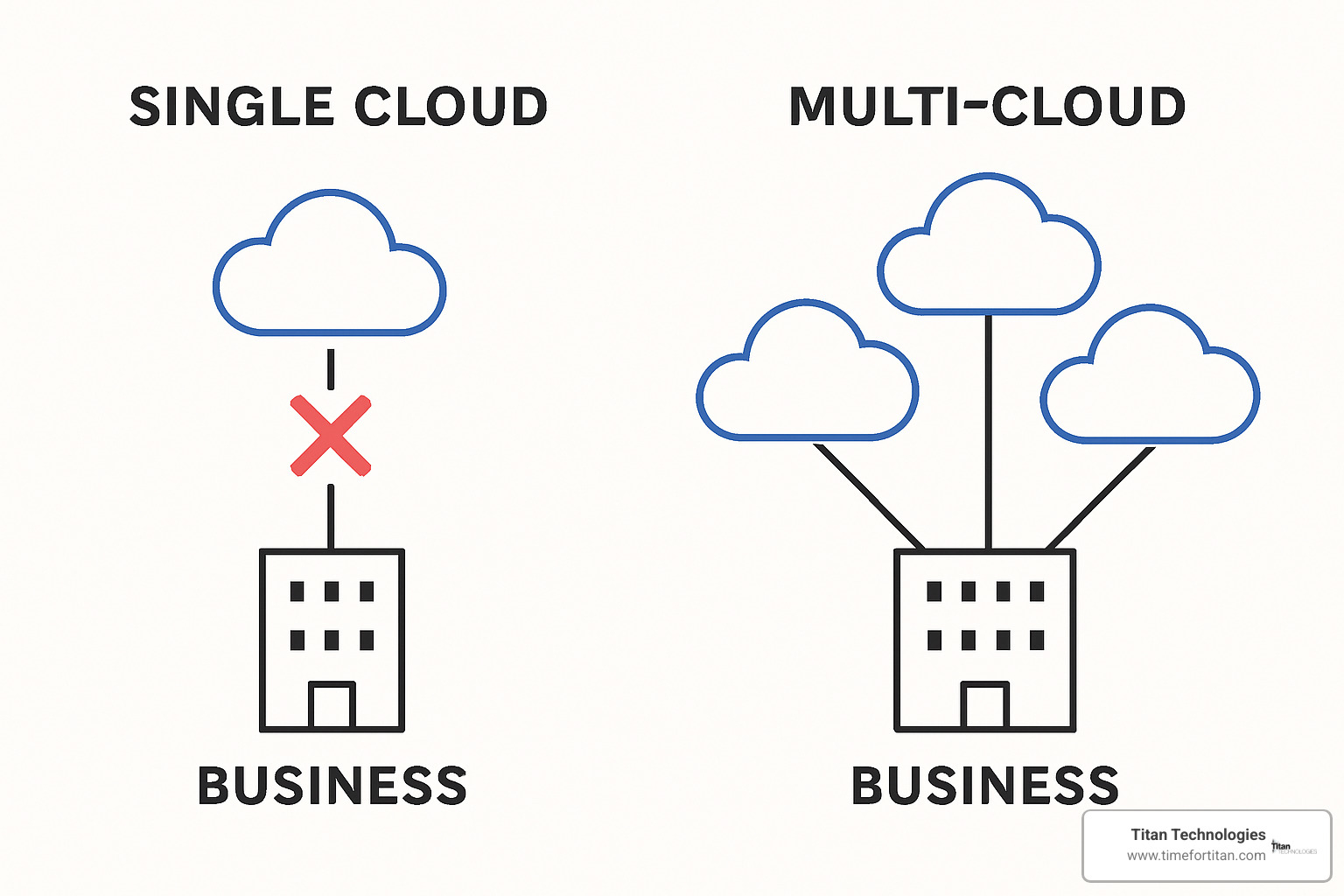
Single-cloud disaster recovery is like having all your important documents in one safe. Even with copies in different drawers, you’re in trouble if something happens to the entire safe.
The appeal of single-cloud approaches is simplicity – one bill, one support team, one set of tools. But even the biggest cloud providers have bad days. When they go down, they often take multiple regions with them.
Multi cloud disaster recovery eliminates this single point of failure by spreading risk across completely independent infrastructure. Yes, it requires more coordination, but the regional resilience and vendor independence can mean the difference between a minor hiccup and a business-ending disaster.
Benefits & Business Value of Multi-Cloud DR
Multi cloud disaster recovery delivers real, measurable value that transforms from nice-to-have into business-critical protection.
The most obvious benefit is zero-downtime capability. When one cloud provider hiccups, your systems smoothly switch to another provider so fast that customers might never notice.
Geographic resilience becomes crucial when disasters don’t respect cloud provider boundaries. Hurricane Sandy taught many New Jersey businesses this lesson. With multi-cloud DR, you’re protected against regional disasters, infrastructure failures, and regulatory changes.
Cost optimization through strategic provider selection lets you leverage the best deals from each provider while maintaining robust disaster recovery. Different providers excel at different things and offer unique pricing models.
Feature flexibility gives you access to best-in-class services from each provider. One might excel at database services while another offers superior content delivery networks.
Real results speak volumes. Ciox Health protects 500TB of data daily for less than $20,000 monthly. Carrefour slashed backup windows from hours to 30 minutes. Gulf Air boosted data availability by an estimated 30%.
| Metric | Single-Cloud Model | Multi-Cloud Model |
|---|---|---|
| Typical Uptime | 99.9% (8.8 hours downtime/year) | 99.99%+ (53 minutes downtime/year) |
| Cost Optimization | Limited to one provider’s pricing | Leverage best pricing from multiple providers |
| Scalability | Constrained by single provider limits | Nearly unlimited through provider diversity |
How Multi Cloud Disaster Recovery Improves Business Continuity
Organizations consistently report achieving 99.99% or higher uptime with proper multi-cloud failover strategies. This isn’t just about backups – it’s about maintaining active, operational systems.
Customer trust becomes your secret weapon. When competitors post “technical difficulties” messages, your services keep running. Customers notice reliability, especially during industry-wide outages.
Compliance wins matter enormously. Many frameworks require demonstrable disaster recovery capabilities, and multi-cloud approaches provide rock-solid evidence of preparedness.
More info about Business Disaster Recovery (BDR) can help you understand how these concepts apply to your specific situation.
Financial & Reputational Impact
Ransomware avoidance has become critical. When cybercriminals can’t access all your backup copies across multiple providers, you can recover without paying ransoms. We’ve seen businesses save hundreds of thousands by having immutable backups spread across different clouds.
SLA penalty protection matters more than many realize. Service level agreements often include financial penalties for downtime. Multi-cloud DR helps avoid these costly penalties.
Brand protection has real financial value. Outages become public instantly through social media. When your business stays online during widespread outages, that reliability becomes powerful marketing.
Some cyber insurance policies offer reduced premiums for robust disaster recovery plans. The insurance industry recognizes that multi-cloud strategies significantly reduce risk.
Challenges, Risks & Cost Considerations
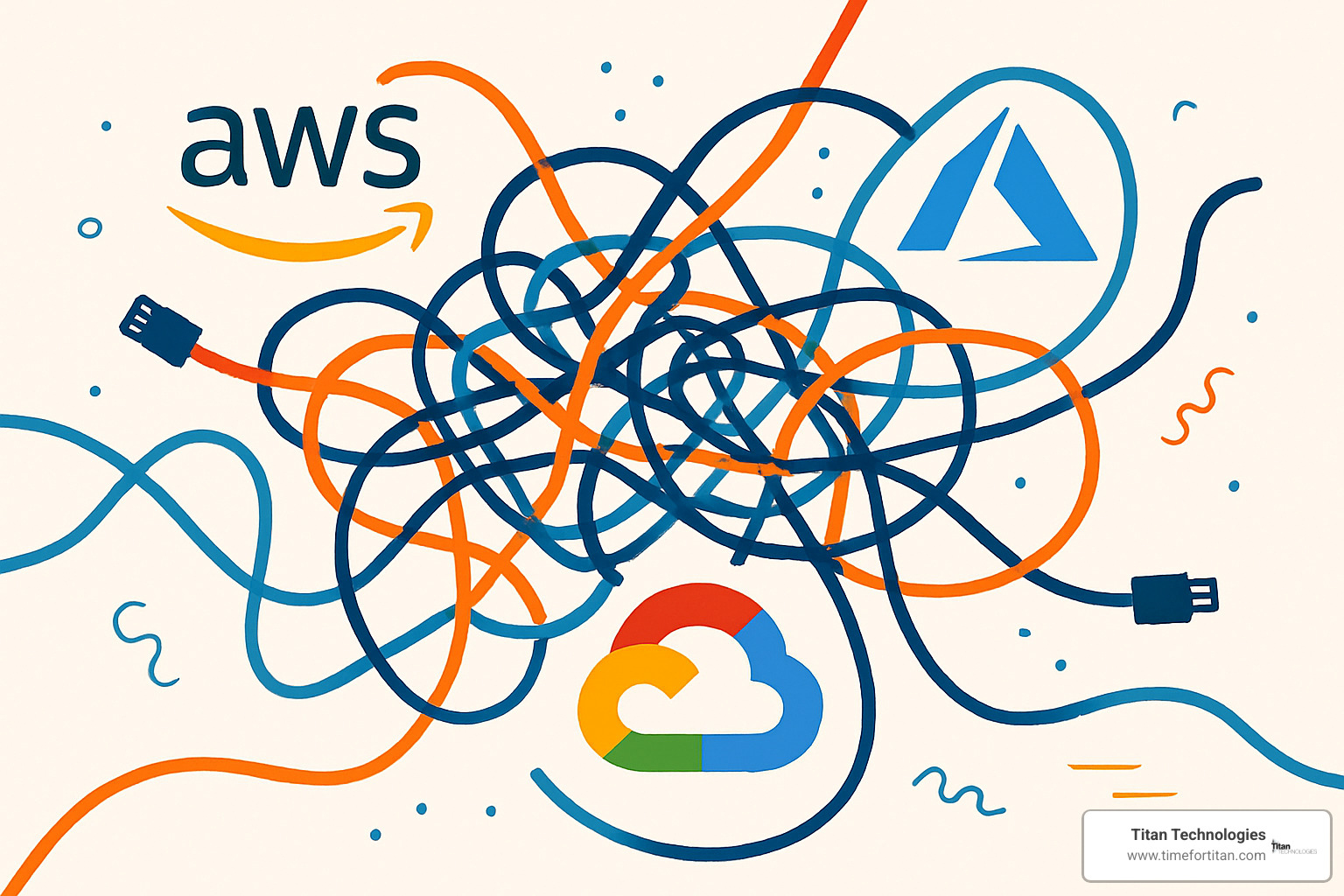
Multi cloud disaster recovery brings real challenges that require careful planning.
The biggest headache is operational complexity. Managing multiple cloud providers is like juggling three different remote controls – each with completely different interfaces and approaches.
The skills gap affects about 40% of organizations whose IT teams lack expertise to manage multiple cloud environments effectively. Training or hiring specialists costs money and time.
Data consistency across clouds can be problematic. When replicating data between providers, each handles timing, formats, and protocols differently. During failover, “synchronized” data might not be as synchronized as expected.
Egress fees – charges for moving data between providers – add up quickly. Transferring 500 GB might cost around $44, but with terabytes moving regularly, costs escalate.
Shadow IT problems worsen with multiple clouds available. Teams start spinning up resources across platforms without oversight, creating governance nightmares.
Scientific research on cloud data growth shows data volumes exploding, making these challenges more complex.
Security & Compliance Problems
Encryption key management becomes complex when data lives across multiple providers. Each platform has different key management systems with varying features and limitations.
The shared responsibility model varies between providers in ways that can leave dangerous gaps. One provider might handle network security while another expects you to manage it.
Audit complexity reaches new levels when compliance auditors examine multiple cloud environments. Each provider generates logs differently and provides different reporting tools.
Identity and access management coordination requires sophisticated planning to ensure users have appropriate access across all platforms while maintaining security.
More info about Data Protection Plan can help steer these complex security considerations.
Cost Management Best Practices
Right-sizing resources across providers is crucial since cost-effectiveness varies between clouds. Regularly review allocations based on actual usage patterns.
Tiered storage strategies save significant money. Keep frequently accessed recovery data in premium storage while moving archival backups to cheaper cold storage options.
Reserved instance planning requires coordination across providers to lock in discounted rates for predictable workloads while maintaining disaster recovery flexibility.
Automated cost monitoring tools tracking spending across all providers are essential. Set up alerts when costs exceed thresholds to catch budget overruns early.
Risk Mitigation Strategies
Staff training investments pay dividends in reduced complexity and fewer mistakes. The upfront cost is much less than fixing problems caused by inexperience.
Infrastructure as Code (IaC) tools maintain consistent configurations across providers, ensuring reproducible deployments and reducing human error.
Regular testing through quarterly failover drills validates procedures and identifies gaps before they become critical.
Building a Robust Multi-Cloud Disaster Recovery Plan
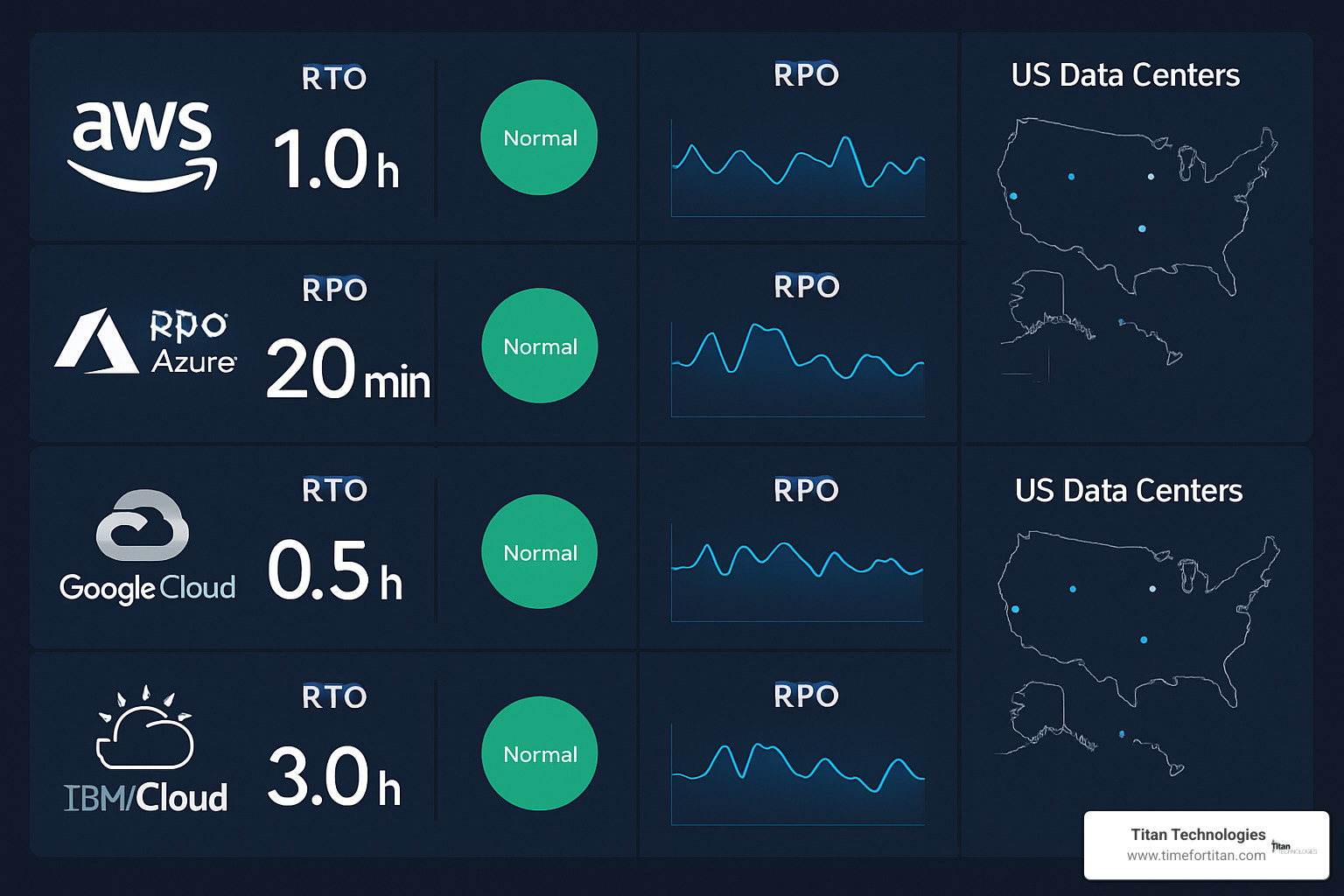
Building a solid multi cloud disaster recovery plan requires careful planning and systematic implementation.
Start with understanding what you’re protecting. Every business has different priorities, and your disaster recovery plan must reflect those realities.
The assessment phase involves examining your current setup. What systems keep your business running? Where is data stored? How do applications connect? This forms the foundation for everything that follows.
Next, design your multi-cloud architecture. This isn’t just picking two providers – you need to plan data flows, backup locations, and traffic redirection during failures.
Implementation requires patience and attention to detail. Take a phased approach, testing each component thoroughly before moving to the next piece.
Orchestration tools tie everything together, automating the complex failover process across multiple cloud providers.
Setting Recovery Time & Point Objectives
Getting your Recovery Time Objectives (RTO) and Recovery Point Objectives (RPO) right makes the difference between effective disaster recovery and wasted investment.
RTO answers “how long can we be down before it really hurts?” For e-commerce sites, fifteen minutes during peak season could mean thousands in lost sales. For internal HR systems, a few hours might be acceptable.
RPO addresses “how much data can we afford to lose?” Financial transactions might require five-minute RPOs, while employee vacation photos might tolerate daily RPOs.
Business impact analysis drives these decisions. Ask department heads what happens if systems go down for an hour, day, or week. The answers help prioritize disaster recovery investments.
Workload tiering makes this practical. Mission-critical systems might need five-minute RTOs and one-minute RPOs, while internal reporting systems might accept four-hour RTOs and one-hour RPOs.
Data Consistency & Synchronization
Keeping data synchronized across multiple cloud providers is critical for multi cloud disaster recovery success.
Synchronous replication keeps everything perfectly in sync but can slow systems. Every update must be confirmed across all providers before completing.
Asynchronous replication works like email – changes get sent to other providers, but primary systems don’t wait for confirmation. This maintains speed but creates small windows where backup data might lag.
Most successful implementations use hybrid approaches. Critical financial data gets synchronous replication for accuracy, while less critical information uses asynchronous replication for performance.
Security & Compliance Frameworks
Unified security policies ensure consistent protection across all cloud providers. Password requirements, access controls, and encryption standards should work identically regardless of which cloud hosts the data.
Identity federation solves the nightmare of managing separate accounts across multiple providers. Employees sign in once and get appropriate access to all needed systems.
Encryption standards must remain consistent across platforms. Use the same algorithms and key management practices everywhere.
More info about Cloud-Based Disaster Recovery Plan provides deeper security guidance.
Automation & Orchestration Tools
Manual disaster recovery is unreliable under pressure. Multi cloud disaster recovery demands automation.
Cross-cloud orchestration platforms act like universal remote controls, managing everything from one place instead of multiple cloud dashboards.
Infrastructure as Code tools like Terraform ensure disaster recovery environments match production systems exactly, eliminating guesswork during emergencies.
DNS-based failover provides traffic direction that makes failover invisible to users, automatically redirecting traffic when problems are detected.
Testing & Validation Drills
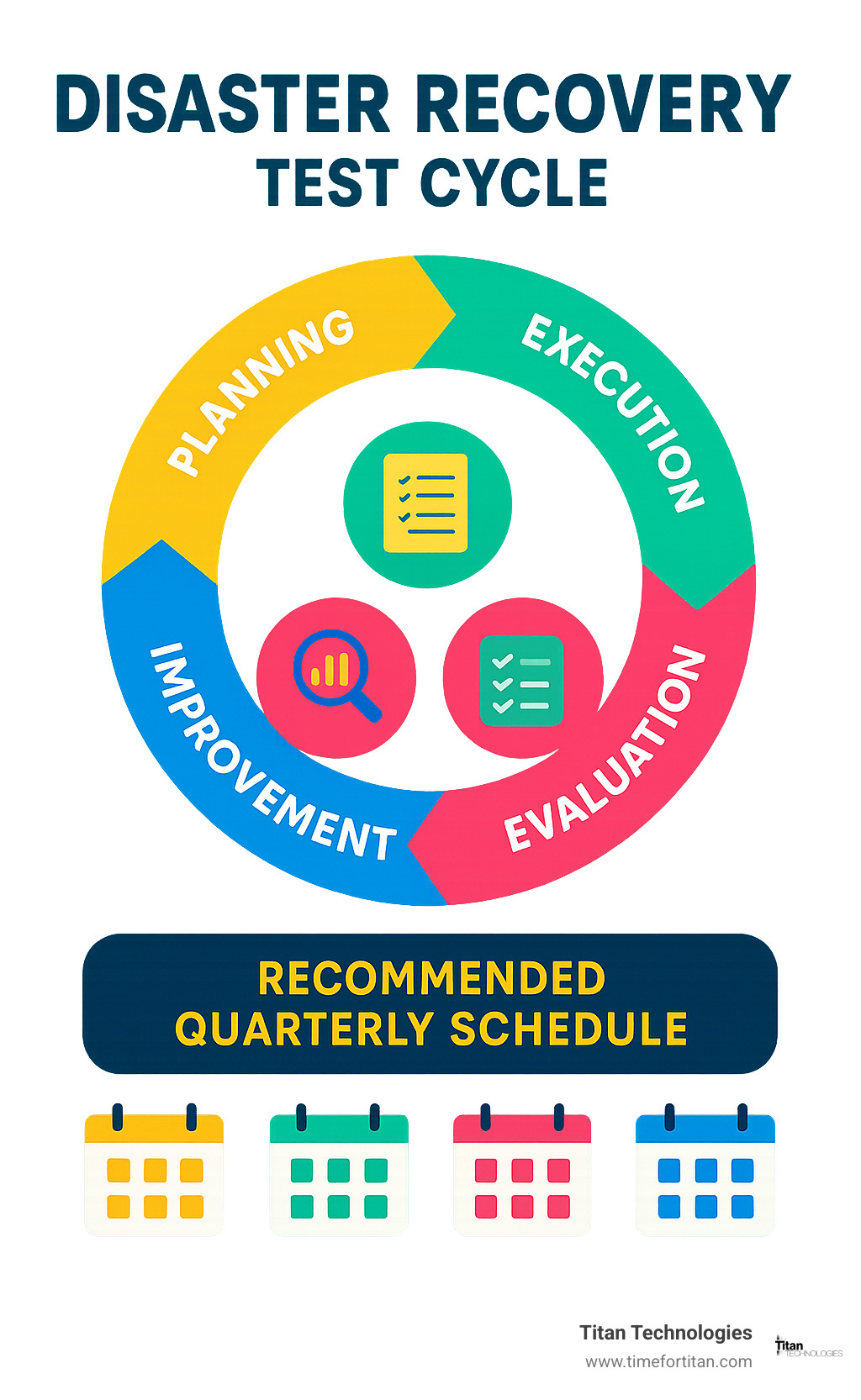
Quarterly failover tests should become routine, validating that systems can actually switch between cloud providers when needed.
Chaos engineering deliberately breaks things to see how systems respond. It’s better to find problems during controlled testing than real emergencies.
Runbook validation ensures documented procedures actually work. Walk through each step with fresh eyes – what seems obvious might confuse others during high-stress situations.
Performance testing verifies disaster recovery systems can handle real production workloads under realistic conditions.
Future Trends & Emerging Technologies

The multi cloud disaster recovery landscape is evolving rapidly with breakthrough technologies making disaster recovery smarter and more reliable.
Artificial intelligence is revolutionizing disaster recovery by predicting failures days or weeks in advance. AI systems analyze patterns across multi-cloud infrastructure, spotting subtle signs human administrators might miss.
Imagine getting alerts saying “Your primary database server shows signs it might fail next Tuesday.” These systems don’t just predict problems – they automatically shift workloads to healthier systems before failures occur.
Immutable storage technologies are becoming the gold standard for backup protection. Think of immutable storage as digital time capsules – once data goes in, nobody can change or delete it, not even ransomware attackers.
Cross-cloud Kubernetes orchestration makes multi-cloud deployments simpler. Container technology lets applications run anywhere, and modern orchestration platforms automatically move workloads between cloud providers when needed.
Serverless disaster recovery services handle all complexity automatically, coordinating failover across multiple providers without requiring deep technical expertise.
The Road Ahead
Edge computing integration will bring disaster recovery capabilities closer to users. Instead of recovering everything in distant data centers, future systems will maintain backup resources at edge locations, dramatically reducing recovery times.
5G networks will eliminate latency challenges that currently complicate multi-cloud synchronization. When data moves between providers almost instantaneously, real-time backup and failover become practical.
Automated compliance management tools will automatically ensure disaster recovery setups meet regulatory requirements, adapting to changing regulations automatically.
Quantum-safe encryption will become essential as quantum computing advances. Multi-cloud disaster recovery systems will need quantum-resistant protection across all providers.
Frequently Asked Questions about Multi-Cloud DR
What’s the fastest way to start a Multi Cloud Disaster Recovery pilot?
Start small and build confidence through success. Pick one critical application that would genuinely hurt your business if it went down for hours.
Choose two cloud providers with solid disaster recovery tools and good presence in Central New Jersey. Most major providers offer robust capabilities.
Begin with simple active-passive setup where your main application runs in one cloud while automated backups replicate to the second. Set up basic DNS failover for automatic traffic redirection.
Test monthly by running through failover processes, ensuring applications start properly and users can access everything. Regular testing builds confidence and catches problems early.
Once proven reliable, expand to additional applications and more sophisticated configurations.
How often should we test our multi-cloud failover?
Monthly testing should verify automated backups work properly and connectivity between cloud providers remains solid.
Quarterly testing involves complete failover tests where you actually switch operations from one provider to another, ensuring applications start correctly and users can log in.
Twice yearly, conduct comprehensive disaster recovery drills with your entire team, practicing communication procedures and escalation processes.
Annual testing should simulate complete disaster scenarios, including technical failover, business process validation, and customer communication.
Regular testing keeps teams sharp and systems reliable. It’s less stressful to find problems during planned tests than real emergencies.
Which workloads should stay single-cloud?
Low-risk applications like internal tools often don’t justify multi-cloud complexity. If HR systems go down for hours, it’s annoying but not catastrophic.
Highly integrated systems depending heavily on specific cloud provider features can be difficult and expensive to replicate elsewhere.
Development and testing environments usually don’t need the same protection level as production systems.
Cost-sensitive workloads require careful analysis. Sometimes multi-cloud protection costs exceed business value of improved availability.
The decision should focus on business impact. Ask: “If this system goes down for four hours, what does that cost?” If the answer is less than multi-cloud protection costs, stick with single-cloud approaches.
Conclusion
When the unexpected happens – and it will – multi cloud disaster recovery can mean the difference between staying in business and closing your doors forever. We’ve seen too many companies learn this lesson the hard way.
The reality is sobering: 93% of companies that lose their data center for 10 days or more file for bankruptcy within one year. But here’s the encouraging part – it doesn’t have to be that way.
Multi cloud disaster recovery transforms catastrophic single points of failure into manageable, barely noticeable blips. When one cloud provider goes down, your systems seamlessly continue running on another. Your customers keep shopping, your employees keep working, and your business keeps thriving.
The success stories speak for themselves. Companies implementing multi-cloud strategies report dramatic improvements in uptime, cost savings, and competitive positioning. They sleep better at night knowing their business can survive whatever comes next.
But let’s be honest – this isn’t a set-it-and-forget-it solution. Multi cloud disaster recovery requires careful planning, skilled implementation, and ongoing attention. The complexity of coordinating multiple providers, maintaining data consistency, and ensuring security across platforms demands real expertise.
For businesses across Central New Jersey – from Edison’s busy commercial districts to Princeton’s innovation hubs, from Newark’s enterprise centers to the growing markets of Woodbridge and Freehold – the stakes couldn’t be higher. Your local competitors are watching, your customers expect perfection, and even brief outages can cost thousands in lost revenue and damaged reputation.
That’s where experience makes all the difference. At Titan Technologies, we’ve guided dozens of organizations through successful multi cloud disaster recovery implementations. We understand both the technical complexities and the business realities you face. Our team has the expertise to design solutions that actually work when disaster strikes – not just look good on paper.
What sets us apart is our commitment to your success. We back every implementation with our 100% satisfaction guarantee because we believe your disaster recovery strategy should work flawlessly when you need it most. No excuses, no finger-pointing, no “that’s not covered” – just reliable protection for your business.
The uncomfortable truth is that every day without proper multi cloud disaster recovery protection is another day of unnecessary risk. While you’re reading this, somewhere a business is finding their single-cloud backup strategy wasn’t enough. Don’t let that be your story.
The best time to implement multi-cloud disaster recovery was before your last close call. The second-best time is right now, before the next one happens.
More info about Cloud Services can help you understand exactly how these concepts apply to your business and start building the resilience your organization needs to thrive, no matter what tomorrow brings.
Remember: disasters don’t send calendar invites. But with the right multi cloud disaster recovery strategy, they don’t have to define your future either.